
 Account

The Secret Ingredient to Picture-Perfect Holiday Photos (Hint: It's Under Your Feet)
19 December 2025


26 November 2025

28 October 2025

02 September 2024

08 July 2024

05 June 2024

24 April 2024
Let's talk about something that nearly every British homeowner deals with: small outdoor spaces. You know the situation - you've got a garden that's technically there, but it's more "cosy" than "spacious," more "bijou" than "expansive." Maybe it's a narrow strip behind a terraced house, a compact courtyard, or one of those awkward L-shaped plots that came with your property. Whatever the configuration, you're looking at it thinking "how on earth do I make this feel bigger?"
Here's the brilliant news: with the right paving choices and a few clever design tricks, you can completely transform how spacious your small outdoor space feels. We're not talking about knocking down walls or moving to a bigger house - we're talking about smart choices with patio paving, strategic layout decisions, and design techniques that genuinely fool the eye into seeing more space than actually exists. Your compact patio design is about to get a serious upgrade.
Right, let's start with one of the most powerful tools in your small garden arsenal: colour. This isn't just about personal preference or what matches your fence - this is about understanding how different tones affect the perception of space. Light colours genuinely make areas feel larger because they reflect more light, create an airy atmosphere, and trick our brains into thinking there's more room than there actually is.
For your small outdoor space, limestone paving in lighter tones is absolutely brilliant. Something like Sahara Beige limestone or Sahara Pearl limestone creates that lovely bright, open feeling that makes your garden feel twice its actual size. The warm, pale tones work beautifully in British gardens, reflecting whatever sunlight we manage to get while creating a Mediterranean vibe that feels anything but cramped.
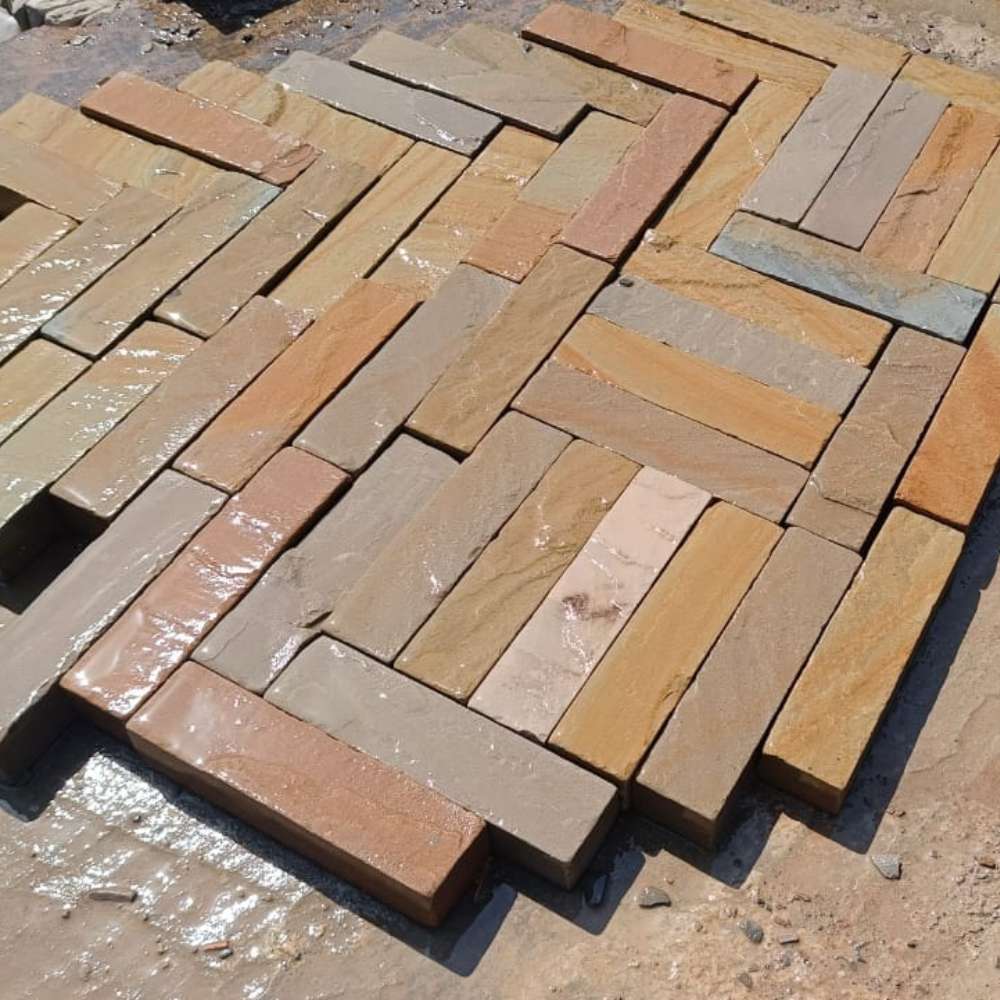
If you prefer the character of Indian sandstone paving, opt for the lighter options in the range. Gwalior Beige sandstone or Rippon Buff sandstone give you those soft, warm tones that open up a space while still offering all the natural variation and character that makes sandstone paving slabs so appealing. The subtle colour variations in natural stone actually help in small spaces because they create visual interest without overwhelming the area with pattern or contrast.
For the ultimate in contemporary garden design with a small footprint, outdoor porcelain tiles in light shades are unbeatable. The consistent colour and smooth finish of porcelain paving creates that seamless, uncluttered look that's perfect for modern patios in compact spaces. Plus, the reflective quality of porcelain bounces light around your garden, making everything feel more open and airy.
Now, here's the thing about dark paving in small gardens: it can work, but you need to be really careful. While Ash Black granite or Kandla Grey sandstone look absolutely stunning, they can make a small garden feel smaller and potentially gloomy, particularly if you don't get much direct sun. If you're absolutely set on darker tones, use them strategically - maybe as borders or accent areas with lighter natural stone paving for the main space.
Here's a game-changing small garden idea that sounds almost too simple to work - but honestly, it's transformative. Instead of laying your paving parallel to your house or fence, angle it diagonally across your space. This one decision can make your compact patio design feel significantly larger because it creates longer sight lines and draws the eye across the space rather than emphasizing its actual dimensions.
With 22mm calibrated paving or 18mm calibrated, laying diagonally is actually quite straightforward because the consistent thickness makes cutting and fitting easier. Your installer will thank you for choosing calibrated slabs if you're going diagonal - and if you're DIYing, you'll definitely thank yourself. The clean, precise edges of calibrated sandstone paving slabs make achieving those neat diagonal cuts much easier than working with completely natural-edged stones.
For porcelain paving, diagonal laying looks particularly striking because of the consistent colour and precise edges. Imagine Kandla Grey porcelain or Raj Green porcelain laid at a 45-degree angle - it completely changes how you perceive the space. Your eye travels along those diagonal lines, making the area feel more dynamic and, crucially, larger than it actually is.
The beauty of diagonal laying is that it works with virtually any garden paving material. Whether you're using Raj Green sandstone, Kota Blue limestone, or contemporary outdoor porcelain tiles, that diagonal orientation creates movement and interest while making your small outdoor space feel more generous.
Here's something counterintuitive that surprises a lot of people: in small gardens, larger slabs often make the space feel bigger. Your instinct might be to use smaller pavers thinking they'll be more proportionate, but actually, large format slabs create fewer joints, less visual fragmentation, and a more spacious, uncluttered appearance that's perfect for compact patio design.
The 600x900 single size format is absolutely brilliant for small gardens. These generous slabs work beautifully with Indian sandstone paving, limestone paving, granite paving slabs, and porcelain. The larger format means you might only need fifteen or twenty slabs for your entire patio, creating that clean, contemporary look that makes everything feel more spacious.
For an even bolder approach in contemporary garden design, consider 600x1200 single size slabs. These large format options are particularly stunning in natural stone paving because you get more of the stone's natural beauty in each piece. In a small space, using fewer, larger slabs creates a sophisticated, almost gallery-like feel that's miles away from the busy, cluttered appearance that multiple small pavers can create.
That said, if you absolutely love the look of mixed sizes, patio packs can work in small spaces - but you need to be strategic about it. The random pattern creates visual interest, which is great, but too much variation in a tiny area can feel chaotic. If you're going for a mixed size approach with your patio paving, consider using it in just one zone while keeping other areas more uniform to maintain that sense of space.
One of the cleverest space-saving paving tricks for small gardens is creating continuity between your indoor flooring and your outdoor paving. When the inside flows seamlessly to the outside, your brain reads it as one larger space rather than two separate, smaller ones. This is particularly effective with modern patios and contemporary garden design.
If you've got large glass doors or bifolds leading to your garden, choosing porcelain paving that matches or closely coordinates with your interior flooring is absolutely transformative. The same colour palette and material flowing from your kitchen or living room out onto your patio makes both spaces feel larger. Outdoor porcelain tiles in neutral tones like grey, beige, or white create that seamless transition that's so crucial in small outdoor spaces.
Even if you prefer natural stone paving for your outdoor living space, you can still create this flow through careful colour coordination. Choose paving that complements your interior palette - if you've got warm wood floors inside, something like Raj Green sandstone or Autumn Brown sandstone creates a beautiful warm connection. Cool grey interiors pair gorgeously with Kandla Grey or Tandur Grey limestone.
For the best paving for patios that need to feel larger, consider the threshold detail too. Rather than having a step down to your garden, work with your landscaper to create a level transition if possible. When your 22mm calibrated paving sits at the same level as your interior floor, it genuinely makes both spaces feel like parts of one larger area - brilliant for small outdoor spaces where every psychological trick helps.
Here's a tricky balance in small garden ideas: you want to create different areas for different purposes without making each area feel tiny and cramped. The solution? Strategic zoning using subtle changes in garden paving rather than obvious divisions or barriers.
Consider using the same material but different finishes to create zones. Maybe your main seating area uses smooth honed sandstone paving slabs while a pathway through your compact garden uses a riven finish in the same stone. The colour continuity maintains that sense of space while the textural difference subtly defines different areas. It's clever, sophisticated, and works beautifully in British gardens where you want practical zones without obvious barriers.
Alternatively, use complementary materials that work harmoniously together. Perhaps your main patio paving is Raj Green sandstone while a border or pathway uses granite setts and cobbles. The textural and scale difference creates definition without visual barriers, making your small outdoor space feel thoughtfully designed rather than cramped.
For contemporary garden design in compact spaces, porcelain paving in different laying patterns can create zones beautifully. Your main area might feature 600x600 porcelain laid in a straight pattern, while a pathway or secondary area uses the same tiles laid diagonally or as planks. The material continuity keeps things feeling spacious while the pattern change defines different purposes.
Borders in small gardens are a delicate balance. Done wrong, they make your space feel even smaller - like you've drawn attention to its boundaries. Done right, they create definition and sophistication while actually making the space feel more intentional and, surprisingly, larger.
The key is using borders that complement rather than contrast too heavily with your main paving. If you've got light limestone paving as your primary material, a border of slightly darker tumbled limestone or limestone setts creates subtle definition. For Indian sandstone paving in mixed tones, borders in a coordinating single colour provide that finishing touch without chopping up your space.
Here's a particularly effective trick for small outdoor spaces: instead of running borders around the entire perimeter (which emphasizes your boundaries), use them selectively. A border along just one or two edges, or around a specific feature like a seating area, creates visual interest and definition without making your garden feel enclosed. It's those subtle design decisions that separate compact patio design that feels sophisticated from design that just feels cramped.
Bullnose steps deserve special mention here. If your small garden has any level changes and many do - proper steps in matching material create such a polished look. Rather than being an afterthought, sandstone bullnose steps or limestone steps become a design feature that makes your space feel intentional and well-designed, which contributes to that overall impression of quality and, by extension, spaciousness.
In small British gardens that might not get masses of direct sunlight, choosing the right finish on your paving can make a significant difference to how bright and spacious your outdoor living space feels. Different finishes reflect light differently, and in a compact space, that reflected light genuinely matters.
Smooth honed finishes on natural stone paving reflect more light than heavily textured surfaces, making them excellent for small gardens that need brightening. The semi-polished surface of smooth honed sandstone or limestone bounces light around your garden, creating that open, airy feeling that's so important in compact spaces.
Porcelain paving with its inherently reflective surface is particularly brilliant for small modern patios. The smooth, consistent finish of outdoor porcelain tiles reflects light beautifully without being overly shiny or looking artificial. For safety in British weather, R11 anti-slip porcelain paving gives you that slight texture for grip while maintaining enough smoothness to reflect light effectively.
That said, if you prefer the authentic character of a riven finish, don't let concerns about light put you off entirely. The natural texture of riven Indian sandstone creates gorgeous shadow play and visual interest that can actually make a small space feel more dynamic. Just pair it with lighter colours to compensate - riven Raj Green or riven Fossil Mint give you that lovely natural texture without making your space feel dark.
Here's a clever small garden idea that combines paving with planting in a way that actually makes your space feel larger: integrated planting pockets. Instead of having completely separate paved areas and planting beds (which fragments your small outdoor space), create deliberate gaps in your patio paving for plants.
This works particularly beautifully with calibrated paving because the consistent dimensions make it easier to create intentional gaps. Leave space for a small tree, some architectural grasses, or a cluster of lavender breaking up the expanse of stone. The plants soften the hard landscaping and draw the eye upward, making your compact patio design feel more spacious because you're using the vertical dimension, not just the limited horizontal space.
For contemporary garden design, minimalist planting pockets in your porcelain paving create stunning focal points. Imagine sleek Kandla Grey porcelain with a single architectural specimen plant or a drift of ornamental grasses - it's sophisticated, it maximizes your usable space, and it makes everything feel more designed and less cramped.
The beauty of this approach is that you're not sacrificing precious paved area for separate flower beds. Your natural stone paving provides the functional space you need while integrated planting brings life, colour, and vertical interest that makes your small outdoor space feel anything but small.
Even the most perfectly designed patio paving can be let down by oversized furniture that overwhelms a small space. This isn't strictly about paving choice, but it's so crucial to making your compact patio design work that it deserves mention.
When you've chosen beautiful limestone, sandstone, granite, or porcelain paving specifically to make your space feel larger, make sure your furniture choices support rather than undermine that effort. Slim-profile furniture, transparent or glass-topped tables, and furniture that can be folded or stacked when not in use all help maintain that sense of space.
Think about the visual weight of different materials on your paving. Heavy, chunky wooden furniture can dominate your small outdoor space, while lighter materials or furniture with visible legs (rather than solid bases) creates that essential sense of airflow and space. Your gorgeous sawn finish or smooth porcelain should be visible, not completely hidden under oversized furnishings.
The absolute best paving for patios in small gardens is paving that's chosen as part of a holistic design approach. Every decision - from the material and colour to the laying pattern and finish - should work together to create that crucial impression of space. Your outdoor living space might be compact, but with thoughtful choices, it can feel generous, welcoming, and absolutely perfect for your needs.
Whether you opt for light limestone, versatile sandstone, dramatic granite, or sleek porcelain, remember that small gardens offer opportunities that larger spaces don't. Every element is visible, every design decision has impact, and when you get it right, the result is a perfectly formed outdoor room that punches well above its weight.
Your small outdoor space is about to feel a whole lot bigger. Time to start planning that transformation!
Thanks for subscribing!
This email has been registered!


